

Hey there! As a supplier of Food Weight Detectors, I'm super stoked to break down how the data - logging feature of these nifty devices works. It's a game - changer in the food industry, and I can't wait to share all the details with you.
First off, let's understand what data - logging is. In simple terms, it's the process of collecting and storing data over a period of time. When it comes to Food Weight Detectors, this data mainly revolves around the weight of the food products being measured. But it's not just about knowing the weight; it's about having a record that can be analyzed and used to improve various aspects of the food production process.
So, how does it all start? Well, when a food item passes through the Food Weight Detector, the built - in weighing mechanism gets to work. This mechanism is usually highly accurate, often using advanced load cells that can detect even the slightest changes in weight. Once the weight of the food item is measured, the data is sent to the detector's internal system.
The internal system of the Food Weight Detector is like the brain of the operation. It's where all the data - logging magic happens. This system is equipped with software that's designed to handle and store the weight data. The software first validates the data to make sure it's accurate. It checks for any anomalies, like sudden spikes or drops in weight that could indicate a malfunction or an irregular food item.
Once the data is validated, it's stored in a database. This database can be either internal to the detector or connected to an external server, depending on the setup. Storing the data in an external server has its advantages. It allows for easier access to the data from different locations, and it provides more storage space, which is great if you're dealing with a large volume of food items.
Now, let's talk about what kind of data is logged. Obviously, the most important piece of data is the actual weight of the food item. But that's not all. The data - logging feature also records the time and date when the measurement was taken. This is crucial for tracking production trends over time. For example, you might notice that the average weight of your food products tends to be higher in the morning than in the afternoon. This could be due to a variety of factors, like changes in the production process or the freshness of the ingredients.
In addition to the weight, time, and date, the data - logging feature can also record other relevant information. For instance, it can note down the batch number of the food item. This is really useful for quality control purposes. If there's an issue with a particular batch, you can easily look up the weight data for all the items in that batch to see if there are any patterns.
Another cool thing about the data - logging feature is that it can generate reports. These reports can be customized according to your needs. You can choose to see a summary of the weight data for a specific day, week, or month. You can also compare the weight data of different batches or product lines. The reports are usually presented in a clear and easy - to - understand format, with graphs and charts that make it simple to spot trends and patterns.
The data - logging feature also plays a big role in compliance. In the food industry, there are strict regulations regarding the weight of food products. By logging all the weight data, you can easily prove that your products meet the required standards. This can save you a lot of headaches in case of an audit.
Now, let's take a look at how this data - logging feature can be integrated with other systems. Many Food Weight Detectors can be connected to other equipment in the production line, like Weight Sorter Machine. The weight data logged by the detector can be used to sort the food items based on their weight. For example, if you have a product that's supposed to be within a certain weight range, the weight sorter can separate the items that are underweight or overweight.
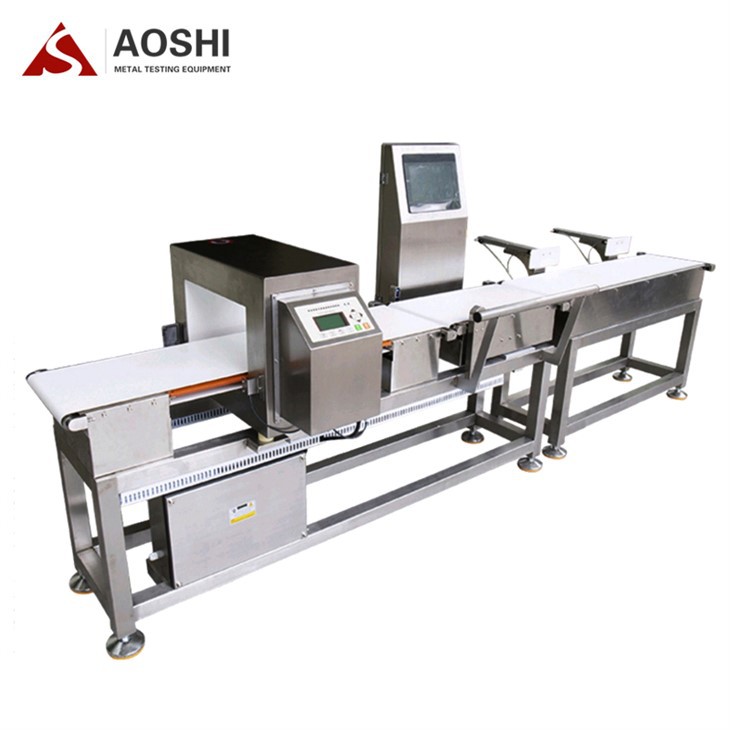

Similarly, the data - logging feature can be integrated with Metal Detector Online Weighing Machine Combined Machine. This combined machine not only measures the weight of the food item but also checks for the presence of metal contaminants. The weight data can be used in conjunction with the metal detection data to ensure the overall quality of the product.
And if you're looking for more advanced sorting capabilities, our Seven Level Weight Sorting Machine can be a great addition. The data - logging feature of the Food Weight Detector can provide the necessary information to sort the food items into seven different weight categories, allowing for more precise control over the production process.
In conclusion, the data - logging feature of a Food Weight Detector is an incredibly powerful tool. It provides valuable insights into the production process, helps with quality control, ensures compliance, and can be integrated with other equipment to improve overall efficiency. If you're in the food industry and you're not using a Food Weight Detector with a data - logging feature, you're really missing out.
If you're interested in learning more about our Food Weight Detectors and how the data - logging feature can benefit your business, don't hesitate to reach out. We're always happy to have a chat and discuss how we can help you take your food production to the next level.
References
- Food Industry Data Management Best Practices, Journal of Food Production Technology
- Advanced Weighing and Sorting Techniques in the Food Industry, International Journal of Food Science and Technology