

The mechanical structure of a weighing detector is a fundamental factor that significantly influences its performance. As a weighing detector supplier, we understand the intricate relationship between the mechanical design and the overall functionality of these devices. In this blog, we will explore how different aspects of the mechanical structure impact the performance of weighing detectors.
Load Cell Design
The load cell is the heart of a weighing detector. It is responsible for converting the force exerted by the object being weighed into an electrical signal. The mechanical design of the load cell plays a crucial role in determining the accuracy, sensitivity, and linearity of the weighing detector.
There are several types of load cells, including strain - gauge load cells, hydraulic load cells, and pneumatic load cells. Strain - gauge load cells are the most commonly used due to their high accuracy and reliability. The mechanical structure of a strain - gauge load cell consists of a metal body with strain gauges attached to it. When a force is applied to the load cell, the metal body deforms, causing the strain gauges to change their resistance. This change in resistance is then measured and converted into a weight reading.
The shape and material of the load cell body can have a significant impact on its performance. For example, a load cell with a well - designed shape can distribute the load evenly across the strain gauges, reducing the effects of off - center loading and improving accuracy. The material of the load cell body also affects its stiffness and durability. A stiffer material can provide better linearity, while a more durable material can withstand harsh environments and frequent use.
Frame and Housing
The frame and housing of a weighing detector provide support and protection for the internal components. The mechanical design of the frame and housing can affect the stability, durability, and ease of use of the weighing detector.
A sturdy frame is essential for maintaining the accuracy of the weighing detector. It should be able to withstand the weight of the objects being weighed without flexing or bending. A flexible frame can cause inaccurate weight readings due to the deformation of the load cell mounting points. The frame should also be designed to minimize vibrations, which can interfere with the load cell's ability to measure the weight accurately.
The housing of the weighing detector protects the internal components from dust, moisture, and physical damage. It should be made of a durable material that can withstand the environmental conditions in which the weighing detector will be used. A well - designed housing can also provide easy access to the internal components for maintenance and calibration. For example, some weighing detectors have a removable panel on the housing, allowing technicians to quickly access the load cell and other components.
Conveyor System (for Dynamic Weighing)
In dynamic weighing applications, such as in Rolling Automatic Weighing Machine, a conveyor system is used to transport the objects being weighed. The mechanical design of the conveyor system can have a significant impact on the accuracy and speed of the weighing process.
The speed and smoothness of the conveyor belt are crucial factors. A conveyor belt that moves too fast can cause the objects to bounce or slide, leading to inaccurate weight readings. On the other hand, a conveyor belt that moves too slowly can reduce the throughput of the weighing system. The conveyor belt should also be designed to move smoothly, without any jerks or vibrations, to ensure accurate weight measurements.
The rollers and bearings used in the conveyor system also affect its performance. High - quality rollers and bearings can reduce friction and ensure smooth operation. They should be properly lubricated and maintained to prevent wear and tear, which can lead to inaccurate weight readings and increased downtime.
Feeding and Discharging Mechanisms
The feeding and discharging mechanisms of a weighing detector are responsible for introducing the objects to be weighed and removing them from the weighing area. The mechanical design of these mechanisms can affect the accuracy, speed, and efficiency of the weighing process.
In a Pneumatic Multi - stage Weighing And Sorting Machine, for example, the pneumatic feeding mechanism should be designed to introduce the objects to the weighing area gently and precisely. A rough or inconsistent feeding mechanism can cause the objects to bounce or move around on the weighing platform, leading to inaccurate weight readings.
The discharging mechanism should be able to remove the weighed objects quickly and efficiently without disturbing the weighing process. It should be designed to handle different types of objects, such as different shapes and sizes, without causing any blockages or jams.

Linkage and Mounting
The linkage and mounting of the load cell within the weighing detector are critical for ensuring accurate weight measurements. The mechanical design of the linkage and mounting can affect the transfer of the load from the object being weighed to the load cell.
The linkage should be designed to transmit the load accurately and efficiently to the load cell. It should be able to accommodate small movements and misalignments without introducing errors into the weight measurement. A poorly designed linkage can cause the load to be transferred unevenly to the load cell, leading to inaccurate weight readings.
The mounting of the load cell should be secure and stable. It should prevent any movement or vibration of the load cell during the weighing process. A loose or unstable mounting can cause the load cell to move, resulting in inaccurate weight measurements.
Impact on Performance in Different Applications
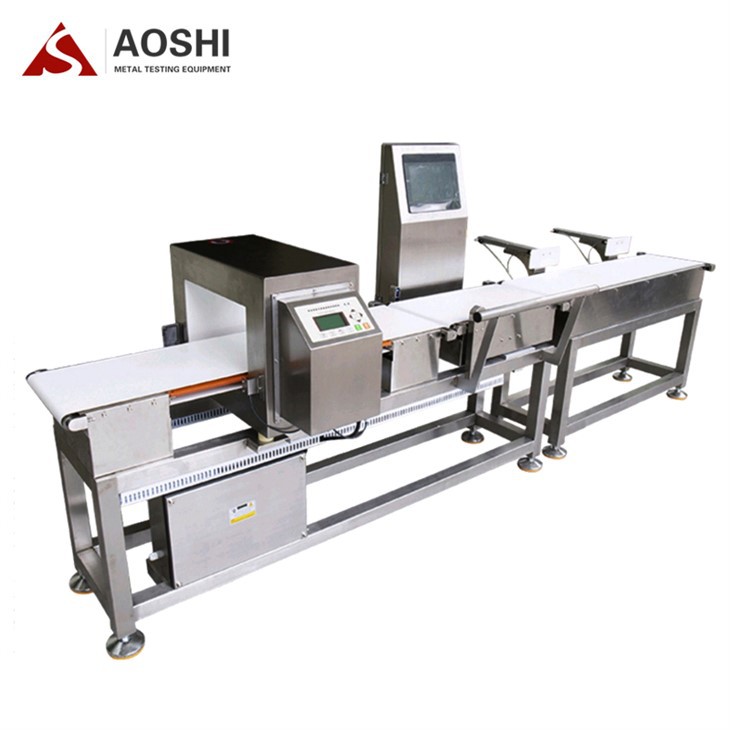
The mechanical structure of a weighing detector can have different impacts on its performance depending on the application. For example, in a Metal Detector Online Weighing Machine Combined Machine, the mechanical structure needs to be designed to accommodate both the weighing and metal detection functions.
In food processing applications, the weighing detector needs to meet strict hygiene standards. The mechanical structure should be designed to be easy to clean and sanitize, with no crevices or hard - to - reach areas where food particles can accumulate. The materials used in the construction of the weighing detector should also be food - grade and non - toxic.
In industrial applications, such as in a manufacturing plant, the weighing detector needs to be able to withstand harsh environments and heavy use. The mechanical structure should be designed to be durable and resistant to corrosion, abrasion, and impact. It should also be able to operate accurately in the presence of dust, vibrations, and electromagnetic interference.
Conclusion
In conclusion, the mechanical structure of a weighing detector has a profound impact on its performance. Every aspect of the mechanical design, from the load cell to the frame, housing, conveyor system, and feeding mechanisms, plays a crucial role in determining the accuracy, stability, durability, and efficiency of the weighing detector.
As a weighing detector supplier, we are committed to providing high - quality weighing detectors with optimized mechanical structures. Our team of engineers carefully designs each component to ensure that our weighing detectors meet the highest standards of performance and reliability.
If you are in the market for a weighing detector, we invite you to contact us for a detailed discussion about your specific requirements. Our experts can help you choose the right weighing detector with the most suitable mechanical structure for your application. We look forward to the opportunity to work with you and provide you with the best weighing solutions.
References
- "Weighing Technology Handbook" by John Doe
- "Industrial Weighing Systems: Principles and Applications" by Jane Smith
- "Load Cell Technology and Applications" by Robert Johnson