

X-ray fluoroscopy is a vital imaging technique that has found extensive applications in both medical and industrial fields. As a leading X-ray fluoroscopy equipment supplier, I am well - versed in the various types of equipment used in this process. In this blog, I will delve into the key pieces of equipment involved in X - ray fluoroscopy, highlighting their functions and significance.
X - ray Generator
At the heart of any X - ray fluoroscopy system is the X - ray generator. This device is responsible for producing the X - rays that are used to create the fluoroscopic images. The X - ray generator consists of a high - voltage power supply and an X - ray tube.
The high - voltage power supply provides the necessary electrical energy to the X - ray tube. It can generate voltages ranging from tens of thousands to hundreds of thousands of volts, depending on the application. For example, in medical applications where soft tissues need to be imaged, lower voltages are often used, while industrial applications that require imaging of thick metal parts may need much higher voltages.
The X - ray tube is a vacuum tube that contains a cathode and an anode. When a high voltage is applied across the cathode and the anode, electrons are emitted from the cathode and accelerated towards the anode. When these high - speed electrons strike the anode, X - rays are produced. There are different types of X - ray tubes available, such as fixed - anode tubes and rotating - anode tubes. Rotating - anode tubes are often used in high - power applications as they can dissipate heat more effectively, allowing for continuous or high - frequency X - ray production.
Image Intensifier
In traditional X - ray fluoroscopy systems, an image intensifier is used to convert the X - rays that pass through the patient or object into a visible light image. The image intensifier consists of an input phosphor, a photocathode, an electron - focusing system, and an output phosphor.
When X - rays strike the input phosphor, they are converted into visible light photons. These photons then strike the photocathode, which emits electrons through the photoelectric effect. The electron - focusing system accelerates and focuses these electrons onto the output phosphor, where they are converted back into visible light, producing a brightened image. Image intensifiers can significantly enhance the image quality and reduce the radiation dose required for imaging. However, they have some limitations, such as a relatively small field of view and distortion at the edges of the image.
Flat - Panel Detector
In recent years, flat - panel detectors have become increasingly popular in X - ray fluoroscopy systems. These detectors offer several advantages over image intensifiers. A flat - panel detector is a solid - state device that directly converts X - rays into electrical signals.
There are two main types of flat - panel detectors: direct - conversion and indirect - conversion detectors. Direct - conversion detectors use a semiconductor material, such as amorphous selenium, to directly convert X - rays into electrical charges. Indirect - conversion detectors first convert X - rays into visible light using a scintillator material, and then convert the light into electrical charges using a photodetector array.
Flat - panel detectors provide a larger field of view, higher spatial resolution, and better image quality compared to image intensifiers. They also have a wider dynamic range, which means they can accurately capture both low - and high - intensity X - ray signals. Additionally, flat - panel detectors are more compact and can be integrated more easily into modern X - ray fluoroscopy systems.
Fluoroscopy Table
A fluoroscopy table is an essential piece of equipment in medical X - ray fluoroscopy. It provides a stable platform for the patient to lie on during the imaging procedure. The table is designed to be adjustable in terms of height, tilt, and lateral movement, allowing the radiologist to position the patient optimally for different types of examinations.
Some fluoroscopy tables are also equipped with a carbon - fiber top, which has a low X - ray absorption coefficient. This helps to reduce the amount of radiation absorbed by the table and improves the image quality. In addition, modern fluoroscopy tables often have a floating top design, which allows for smooth and precise movement of the patient during the examination.
Control Console
The control console is the operator interface for the X - ray fluoroscopy system. It allows the radiologist or operator to control various parameters of the X - ray generator, such as the tube voltage, tube current, and exposure time. The console also provides controls for adjusting the image display, such as brightness, contrast, and zoom.
In addition to basic parameter control, modern control consoles are often equipped with advanced features, such as image processing algorithms for enhancing the image quality, digital storage and retrieval of images, and the ability to perform real - time measurements and calculations on the fluoroscopic images.
Applications in Different Fields
Medical Field
In the medical field, X - ray fluoroscopy is widely used for a variety of diagnostic and interventional procedures. For example, it is used in gastrointestinal studies to visualize the movement of the digestive tract, in orthopedic surgery to guide the placement of pins and screws, and in cardiology to monitor the blood flow in the heart and blood vessels. Medical X-ray Machine is specifically designed to meet the high - precision and safety requirements of medical applications.

Industrial Field
In the industrial field, X - ray fluoroscopy is used for non - destructive testing (NDT) of materials and components. It can detect internal defects, such as cracks, voids, and inclusions, in metal parts, welds, and electronic components. Industrial X-ray Machine is built to handle the harsh industrial environment and provide high - resolution images for accurate defect detection.
Portable Applications
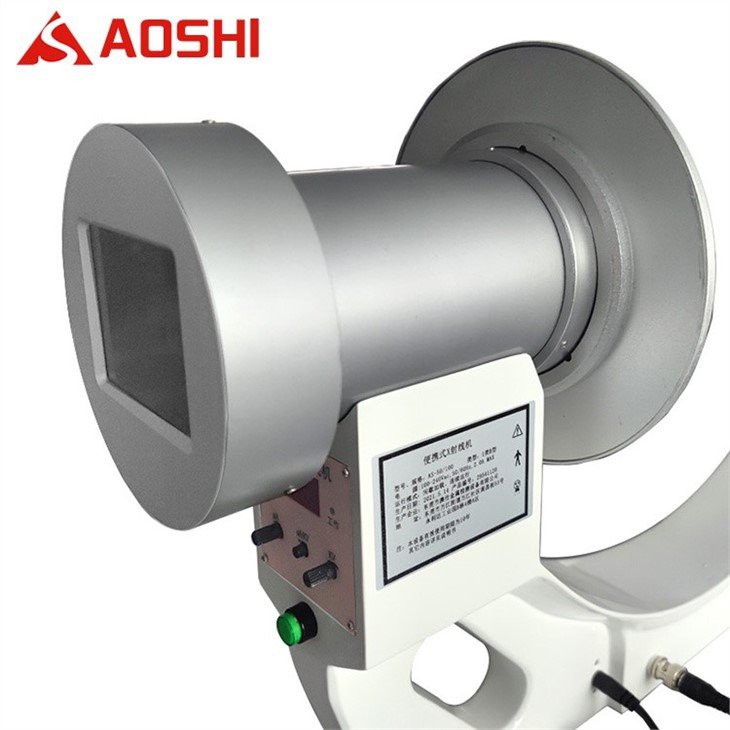
Portable X - ray machines are also available for both medical and industrial applications. These machines are lightweight and easy to transport, making them suitable for use in remote locations or in situations where a fixed X - ray system is not available. Portable X-ray Machine offers the flexibility to perform X - ray fluoroscopy on - site, whether it is for emergency medical care or on - site industrial inspections.
Conclusion
X - ray fluoroscopy is a powerful imaging technique that relies on a combination of sophisticated equipment to produce high - quality images. From the X - ray generator that produces the X - rays to the detectors that convert them into visible images, each piece of equipment plays a crucial role in the fluoroscopy process.
As a supplier of X - ray fluoroscopy equipment, I understand the importance of providing reliable and high - performance products to meet the diverse needs of our customers in the medical and industrial sectors. Whether you are a hospital looking for a state - of - the - art medical X - ray fluoroscopy system or an industrial manufacturer in need of an NDT solution, we have the expertise and the range of products to meet your requirements.
If you are interested in learning more about our X - ray fluoroscopy equipment or would like to discuss a potential purchase, please feel free to contact us. We are committed to providing you with the best equipment and support to ensure the success of your X - ray fluoroscopy applications.
References
- Bushberg, J. T., Seibert, J. A., Leidholdt, E. M., & Boone, J. M. (2012). The essential physics of medical imaging. Lippincott Williams & Wilkins.
- McDavid, W. C., & Papp, C. M. (2017). Industrial radiography: Theory, practice, and quality control. CRC Press.