

In the industrial landscape, ensuring product safety and quality is of paramount importance. Metal needle inspectors play a crucial role in various industries, especially those dealing with textiles, food, and pharmaceuticals. These machines are designed to detect the presence of metal needles or other metallic contaminants in products. However, when operating in high - temperature environments, their functionality and performance face unique challenges. As a supplier of Metal Needle Inspectors, I am well - versed in how these machines work in such demanding conditions.
Basic Working Principle of Metal Needle Inspectors
Before delving into high - temperature operations, it's essential to understand the fundamental working principle of a Metal Needle Inspector. Most metal needle inspectors utilize electromagnetic induction technology. The machine consists of a detection coil through which an alternating current is passed. This creates an alternating magnetic field around the coil. When a metal object, such as a needle, passes through this magnetic field, it disrupts the field and induces eddy currents in the metal. These eddy currents, in turn, generate their own magnetic fields that interact with the original magnetic field of the detection coil. The inspector's sensor detects these changes in the magnetic field and triggers an alarm or stops the conveyor belt to remove the contaminated product.
Challenges in High - Temperature Environments
High - temperature environments pose several challenges to the operation of metal needle inspectors. Firstly, the electrical components within the machine are sensitive to heat. Excessive heat can cause the electrical resistance of the wires and components to increase, which may lead to signal distortion. This can result in false alarms or, worse, the failure to detect actual metal contaminants.
Secondly, thermal expansion is a significant issue. Different materials within the machine expand at different rates when heated. This can cause mechanical stress on the detection coil and other components, potentially leading to misalignment or damage. For example, if the detection coil expands unevenly, the magnetic field it generates may become distorted, reducing the machine's detection accuracy.
Another challenge is the impact of high - temperature on the product being inspected. In some industries, such as food processing, products may change their physical properties at high temperatures. For instance, a food product may become more viscous or change its shape, which can affect the way it passes through the inspection area and the interaction between the metal contaminants and the magnetic field.
Adaptations for High - Temperature Operation
To overcome these challenges, Metal Needle Inspectors designed for high - temperature environments are equipped with several adaptations. One of the key features is the use of heat - resistant materials. The detection coil, for example, is often made from materials that can withstand high temperatures without significant changes in their electrical properties. Specialized insulation materials are also used to protect the electrical components from the heat.
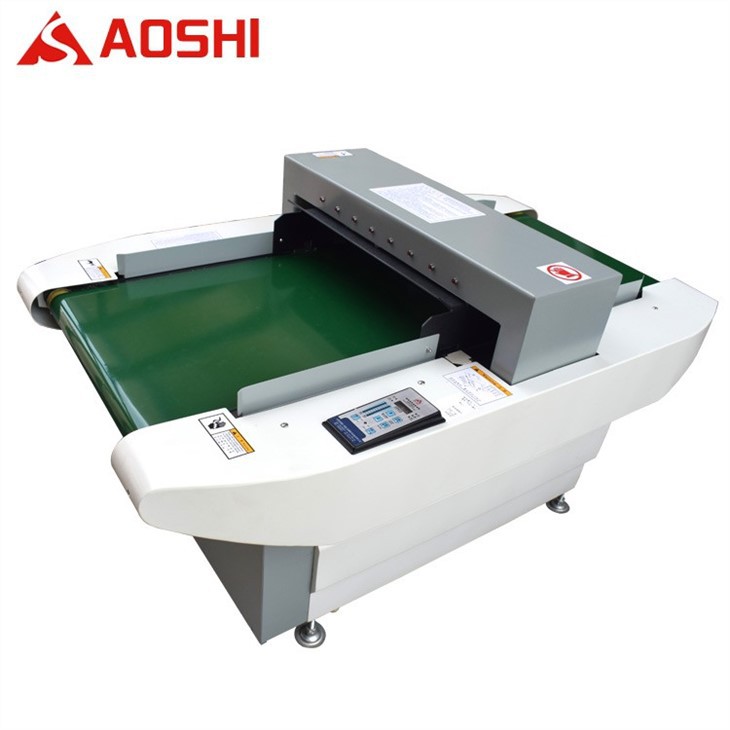

Thermal management systems are another important adaptation. These systems can include cooling fans or heat sinks that help dissipate the heat generated within the machine. Some advanced metal needle inspectors are equipped with liquid - cooling systems, which are more efficient in removing heat from the critical components.
In addition, the machines are designed with a higher tolerance for thermal expansion. The mechanical structure is engineered to accommodate the expansion of different components without causing misalignment. For example, the detection coil may be mounted on a flexible support system that allows it to expand and contract without affecting the magnetic field's integrity.
Advanced Detection Algorithms
To further enhance the performance of Metal Needle Inspectors in high - temperature environments, advanced detection algorithms are employed. These algorithms can filter out the noise caused by the temperature - induced changes in the electrical signals. They can also adapt to the changes in the product's physical properties at high temperatures.
For example, some algorithms use pattern recognition techniques to distinguish between the signals generated by actual metal contaminants and the background noise caused by heat. They analyze the shape, amplitude, and frequency of the signals to make a more accurate determination. Additionally, these algorithms can be adjusted based on the specific characteristics of the product being inspected and the temperature range of the environment.
Real - World Applications
In the food industry, high - temperature metal needle inspectors are used in processes such as baking and frying. After the food products are cooked at high temperatures, they need to be inspected for any metal contaminants before packaging. Our Metal Needle Inspectors can operate effectively in these hot environments, ensuring the safety of the food products.
In the textile industry, high - temperature dyeing and finishing processes require the inspection of fabrics for metal needles. The machines can withstand the high temperatures in the dyeing vats and accurately detect any metallic objects in the fabric, preventing damage to the downstream processing equipment and ensuring the quality of the final textile products.
Product Recommendations
As a supplier, we offer a range of Metal Needle Inspectors suitable for high - temperature environments. Our Long Strip Needle Inspection Machine is designed to inspect long - strip products such as textiles and food strips. It is equipped with advanced thermal management systems and detection algorithms to ensure accurate detection in high - temperature conditions.
Our Metal Needle Inspector is a versatile machine that can be customized for different industries and temperature requirements. It features heat - resistant components and a robust mechanical structure to withstand the challenges of high - temperature operation.
For more demanding applications, our Double Probe Needle Detector provides enhanced detection accuracy. With two detection probes, it can detect smaller metal contaminants and is particularly suitable for high - temperature environments where the signal - to - noise ratio may be lower.
Conclusion
Operating a Metal Needle Inspector in high - temperature environments is a complex task that requires a deep understanding of the technology and the challenges posed by heat. However, with the right adaptations, such as heat - resistant materials, thermal management systems, and advanced detection algorithms, these machines can provide reliable and accurate detection of metal contaminants.
If you are in an industry that requires metal needle inspection in high - temperature environments, we are here to help. Our team of experts can provide you with the best solutions tailored to your specific needs. Contact us to start a procurement discussion and ensure the safety and quality of your products.
References
- "Industrial Metal Detection Technology" by John Smith, published in Industrial Technology Journal, 2018.
- "Thermal Effects on Electrical Components" by Jane Doe, IEEE Transactions on Electronics, 2020.
- "Advances in Metal Detection Algorithms" by Tom Brown, Journal of Sensors and Detection, 2021.